
Red Earth Dough Co Freezer-to-Toppings-to-Oven pizza crust technology replacing traditional dough balls for consistent fermentation flavor and fast pizzeria production
Red Earth Dough Co logo – manufacturer of laminated frozen pizza crusts and pre-proofed pizza dough in Alva Oklahoma

Make Pizza & Profits Like the Big Chains — Without the Chain

Red Earth Dough Co. •  2101  College Blvd    Alva, Oklahoma   73717  •   580-327-0400

For restaurants, pizza operators and foodservice programs

Pizza Dough Balls vs. Pre-Proofed Crusts

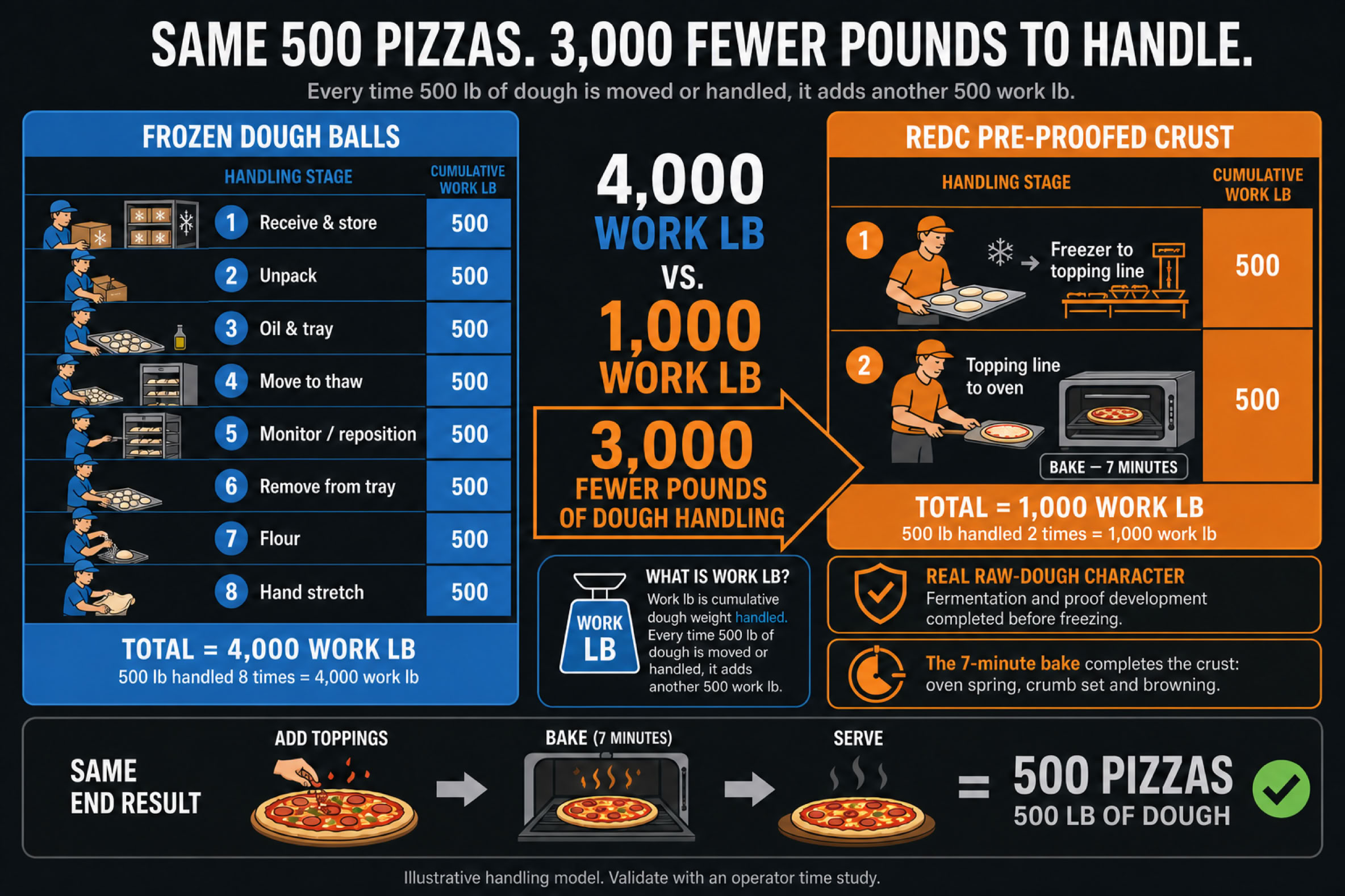
Same 500 pizzas. 3,000 fewer cumulative pounds of dough handling.

Traditional frozen pizza dough balls reduce mixing labor, but every crust must still move through thawing, proof management, tempering, stretching or sheeting, shaping and transfer to the topping line. REDC moves those production steps upstream.

Tell us the story of a normal pizza week.

Rough estimates are welcome. An email will open with these five operating numbers already prompted so REDC can prepare a written dough-handling comparison—no introductory sales call required.

  1. Locations you operate
  2. Pizzas sold in a typical week
  3. Dough balls or crusts handled each week
  4. Total dough-handling labor hours each week
  5. Unused or unsellable dough pieces each week
Open My Five-Number Email  → Prefer the secure website inquiry form?
Comparison showing 500 pounds of frozen dough balls handled across eight stages versus REDC pre-proofed crusts moving from freezer to toppings to oven with fewer handling steps.

The Dough-Ball Readiness Test

Dough balls work when the operation is built to manage them.

The right question is not whether a dough ball can make good pizza. It can. The question is whether your kitchen has the people, space, time and forecasting discipline the process requires—every day and every shift.

Traditional dough-ball fit

Dough balls may fit if you can reliably provide:

  • Skilled dough handlers on every operating shift
  • Freezer, cooler or retarder space for planned thawing
  • Time and space to manage proof development
  • Consistent stretching, sheeting, shaping and docking
  • Accurate forecasts of tomorrow’s pizza demand
  • A plan for unused, over-proofed or mishandled dough

The REDC counterproposal

Pre-proofed crusts may fit better when you need:

  • Crusts kept frozen until current demand requires them
  • No overnight thawing or in-store proof schedule
  • No stretching, sheeting or dough-shaping skill
  • Fewer dough touches before the topping line
  • Faster training and simpler shift-to-shift execution
  • Freezer → Toppings → Oven™ production flow

You may not need a better dough ball. You may need fewer dough-ball steps.

If your team can reliably thaw, proof, stretch and forecast every pizza, dough balls may serve you well. If you cannot—or simply do not want that operational burden—compare your current workflow with REDC pre-proofed crusts.

Pizza Dough Ball Alternative: Common Questions

Do frozen pizza dough balls require thawing and proofing?

Handling instructions vary by supplier and product, but traditional frozen dough balls commonly require controlled thawing, proof development and tempering before they can be stretched or shaped. Operators should always follow the instructions for their specific dough.

What is an alternative to frozen pizza dough balls?

A pre-proofed frozen pizza crust moves proofing and forming upstream to the manufacturer. REDC crusts are designed to remain frozen until needed, then move to the topping line and oven without an in-store thaw, proof or stretch process.

How can restaurants reduce pizza dough-handling labor?

Operators can compare every step between frozen storage and a crust ready for toppings. Moving thawing, proofing, stretching, shaping and dough-box management upstream can reduce the labor and training required inside the restaurant.

Does a pre-proofed crust still deliver fermented dough character?

REDC completes controlled fermentation and proof development before freezing. The final bake completes the crust in the operator’s oven, supporting consistent color, texture and flavor without requiring an in-store proof schedule.

This page describes operational differences, not guaranteed financial results. Labor, storage, waste, throughput and product performance vary by operation, menu, equipment, staff and demand. Validate any comparison using your supplier instructions, an operator time study and your own Profit Booster inputs.